Bench or Ledge: Two Ways to Make a Pause Possible
Bench or ledge? Compare comfort, flexibility, and space to choose street seating that fits its setting and gives visitors a useful place to pause.
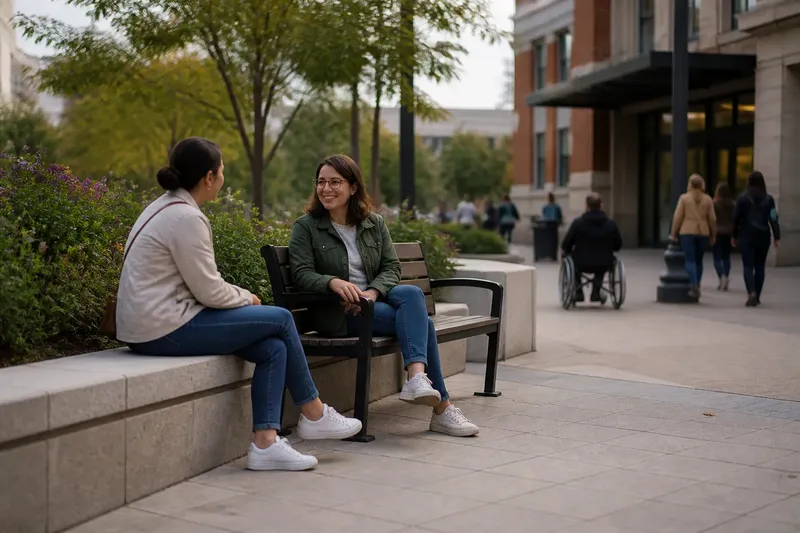
Where should a city put a seat when a sidewalk feels crowded: on a freestanding bench, or along a planter wall? Bench or ledge choices affect comfort, the street’s character, and how easily people can use the space around them.
A bench is an unmistakable invitation to sit, with room for features such as a backrest or armrests. A ledge turns an existing edge—a low wall, broad planter cap, or raised platform—into a possible perch. The right choice depends on the job that spot needs to do.
Edges as seating
A ledge is a horizontal surface that can support sitting, even if it was built mainly to contain soil or mark a boundary. Some are deliberately shaped for a pause; others happen to be broad enough to use.
That difference matters. A stable, smooth edge with a comfortable approach may work well for a short stop. A sloped, rough, narrow, or exposed surface may be awkward, even if someone can technically sit on it. A usable edge should not be confused with a suitable seat.
A bench, by contrast, is built for sitting. Its back, seat, and armrests can be chosen for the intended setting, while its separate footprint gives designers control over where it faces and whom it serves.
Comfort and support
A bench usually offers a more predictable place to rest. A backrest can support someone who wants to stay awhile, and armrests can make sitting down and standing up easier. The seat surface can be selected for contact with clothing and skin.
Still, bench design involves choices. A backless seat may suit a quick pause but offer little support. Armrests between every position can limit how people sit beside one another. A bench facing a blank wall may feel less inviting than one oriented toward a garden, square, or passing activity.
A ledge tends to offer fewer adjustments. It may have no back, and a person may need to shift position to avoid a rough seam or corner. But a broad edge can make an informal place to sit with a companion or watch activity nearby.
Material and exposure shape both experiences. Stone and metal can feel harsh in strong sun or cold weather; rough wood can snag clothing, while a smooth finish may become slippery when wet. Shade, wind, drainage, and surface texture all affect whether a seat feels pleasant.
For a spot meant for a longer rest, choose support first; treat a ledge as the main seat only if its form and setting genuinely suit that purpose.
Choice and companionship
Neither form serves everyone on its own. A bench can offer useful back support, while a ledge can allow people to choose where they sit or face. Both need a thoughtful arrangement around them.
Consider the people who may want to stay together. One person might sit while another stands, or a wheelchair user might want to remain alongside the group rather than apart from it. Open space beside seating can make those arrangements possible without turning a circulation route into a gathering spot.
Say a neighborhood library has a low wall beside its entrance. The wall’s cap is broad and smooth, but a visitor using a wheelchair comes with a friend who prefers a supportive backrest. The city keeps part of the wall available for informal seating, adds a bench nearby, and leaves a clear space beside it. The expected result is a choice of seating styles and a place for the two friends to stay together; if the entrance path becomes crowded, the layout needs another look.
Space and circulation
A ledge may use an edge already occupied by a planter or retaining wall, avoiding another freestanding object. It still takes up space, and people sitting there need room for knees, bags, and companions.
A bench has a distinct footprint. On a tight sidewalk, placing it in the walking line can create a pinch point. In a plaza, that same separate form can define a quiet corner or offer a clear place to rest away from a busy route.
Think about the movements around a seat, not only the object itself. People need to approach, sit, and leave without pushing others toward a doorway or crossing. A ledge beside a narrow passage can attract a cluster in the wrong place, just as a bench near a shop entrance can obstruct people coming and going.
Imagine a small transit forecourt with a planter beside its main walkway. If the planter edge is comfortable, the designer uses it for brief pauses and keeps the route beside it clear. The expected result is informal seating without another object in the narrow area; if people gather across the path, the seating position or route needs reconsideration.
Place and orientation
A seat’s direction can change the feel of a spot. Facing a path makes people-watching easy, but can leave sitters feeling exposed. Facing a garden or public artwork offers a quieter view. A planter ledge may naturally turn people toward greenery, the street, or one another.
Match the orientation to nearby activity. Caregivers near a playground may want a view of the play area. People by a food stall may prefer a seat that faces the activity but stays out of the service line. Seating near a building entrance should be close enough to be useful without blocking access.
Sun, wind, noise, and privacy matter, too. A place in strong afternoon sun may feel uncomfortable on a hot day, while a sheltered wall can feel calm but disconnected from the street. Offering different orientations, where space permits, gives people a more meaningful choice.
Choosing a bench or ledge
Start by identifying what brings people to the spot: a brief pause beside a garden, a longer rest near a civic building, or a wait outside a shop. Then consider the existing edges, nearby activity, and routes through the space.
- Surface: Check whether the edge is stable, smooth, and comfortable to touch. If it is, it may work for informal sitting; if not, choose a different finish or a purpose-built seat.
- Support: Check whether visitors are likely to need back or arm support. If so, include a bench; if not, a suitable ledge may handle brief pauses.
- Approach: Check whether people can reach the seat without crossing planting, a queue, or the main walking line. If they can, keep the location; if not, move it or adjust the layout.
- Adjacent space: Check whether someone using a wheelchair, stroller, or shopping cart can stay near the group. If space is clear, retain it; if not, make room beside the seating.
- Exposure: Check for harsh sun, wind, noise, or an uncomfortable view. If conditions suit the intended pause, keep the orientation; if not, relocate or turn the seat.
- Other functions: Check whether the ledge protects a tree, contains soil, or defines an entrance. If sitting would interfere with that job, keep seating separate; if it does not, consider a deliberately usable edge.
These checks distinguish a genuinely useful sitting edge from a surface that merely looks seat-like. They also help show when a site needs a bench, a ledge, or a combination.
Questions about seating?
Is a ledge accessible seating?
A ledge can be one useful option, but it does not provide the support or range of choices every visitor may need. Where seating is meant for varied users, consider clear adjacent space and a supportive alternative.
Are benches better for long rests?
A bench with a back often provides more support than an informal edge. Its usefulness still depends on the seat shape, armrest placement, orientation, and exposure to weather.
Can a planter wall double as a seat?
It can if the edge is stable, comfortable, and positioned so sitting does not damage plants or obstruct movement. A narrow, rough, or difficult-to-reach border may work better as a planting edge alone.
Should a plaza have both benches and ledges?
A mix can offer a supportive place to rest and a flexible edge for informal sitting. Keep clear paths and nearby room for companions who remain standing or use mobility aids.
When making a bench or ledge decision, look beyond whether someone can perch on the surface. The best arrangement fits the site’s activity, offers distinct ways to pause, and leaves its shared routes and edges usable.